
First Turkic Khaganate
First Turkic state to use the name Türk politically.

Unknown author · CC0
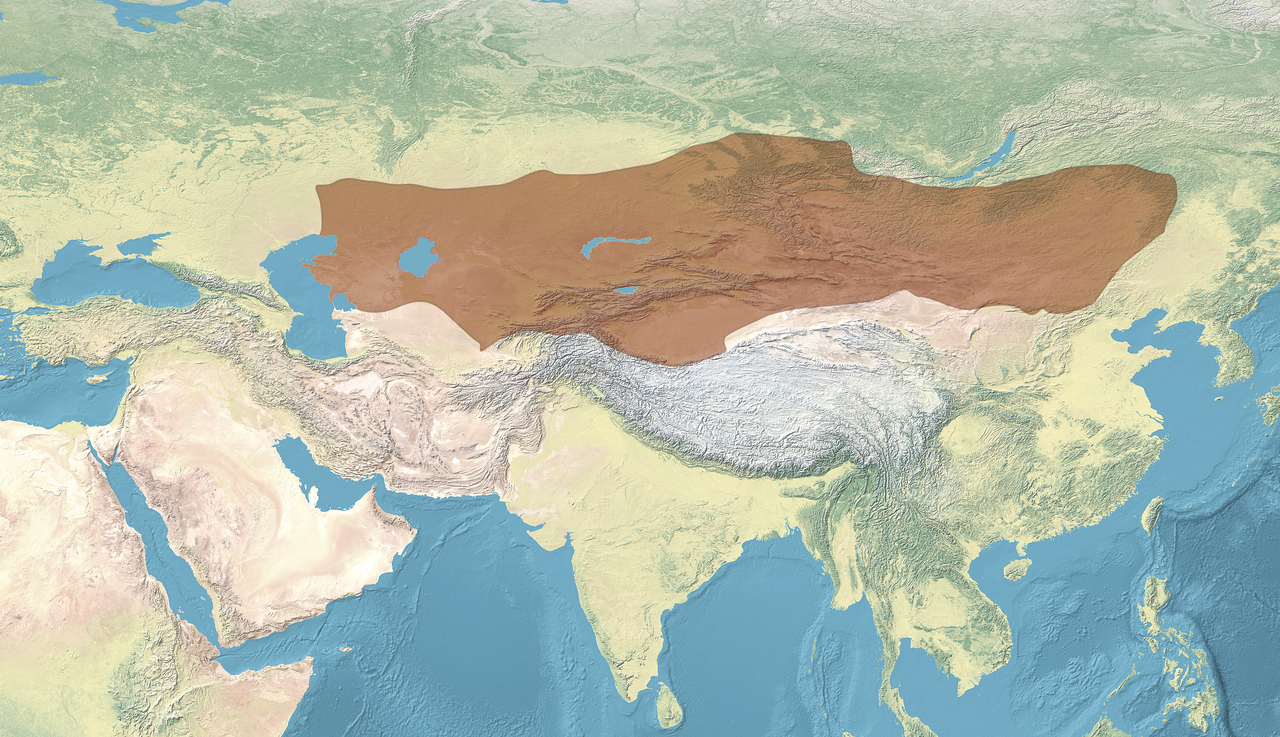
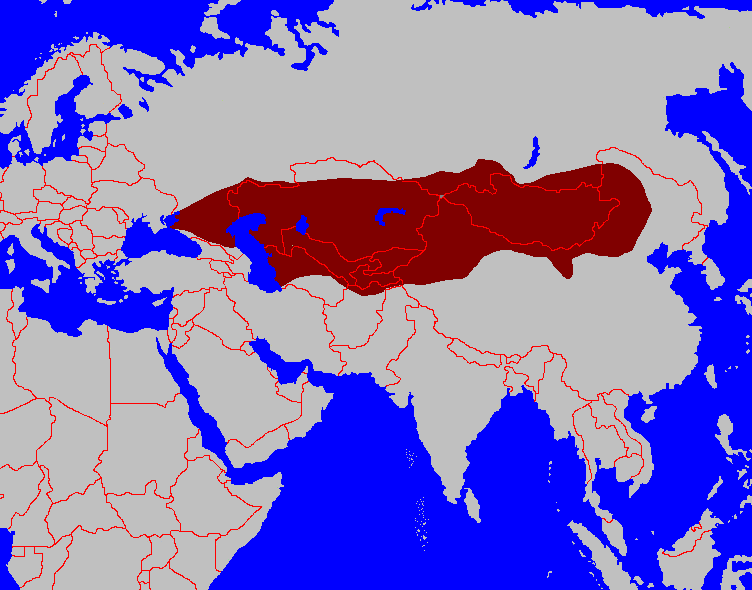
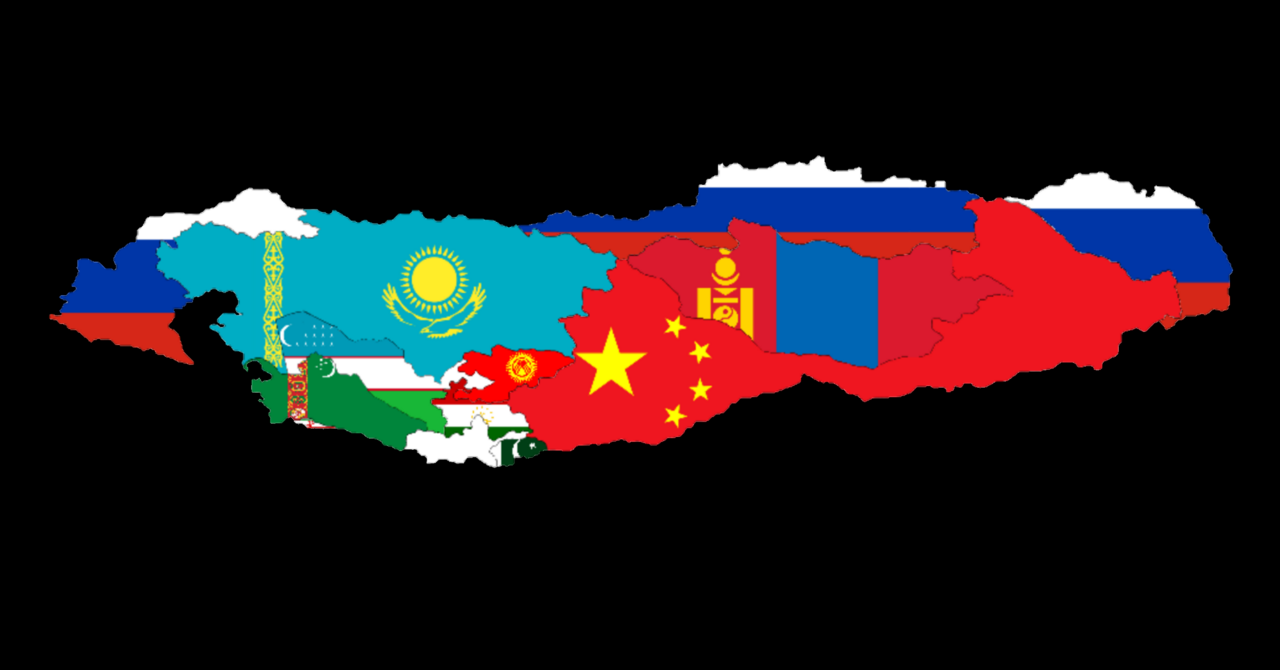
The First Turkic Khaganate, also referred to as the First Turkic Empire, the Turkic Khaganate or the Göktürk Khaganate, was a Turkic khaganate established by the Ashina clan of the Göktürks in medieval Inner Asia under the leadership of Bumin Qaghan (d. 552) and his brother Istämi. It succeeded the Rouran Khaganate as the hegemonic power of the Mongolian Plateau and rapidly expanded its territories in Central Asia, becoming the first Central Asian transcontinental empire from Manchuria to the Black Sea. Although the Göktürks spoke a Siberian Turkic language, the First Khaganate's early official texts and coins were written in Sogdian. It was the first Turkic state to use the name Türk politically. The Old Turkic script was invented in the first half of the sixth century. The Khaganate collapsed in 603, after a series of conflicts and civil wars which separated the polity into the Eastern Turkic Khaganate and Western Turkic Khaganate.
- Collapsed
- 603 (split into Eastern and Western Khaganates; Western continued until 657, Eas
Lore & Background
The origins of the Turkic Khaganate trace back to 546, when Bumin Qaghan made a preemptive strike against the Uyghur and Tiele groups planning a revolt against their overlords, the Rouran Khaganate. For this service, he expected to be rewarded with a Rouran princess, but the Rouran khagan, Yujiulü Anagui, rebuked him, saying, 'You are my blacksmith slave. How dare you utter these words?' A disappointed Bumin allied with the Western Wei against the Rouran by marrying Princess Changle. In 552, Bumin defeated Anagui and his forces north of Huaihuang (modern Zhangjiakou, Hebei), effectively ending the Rouran. Bumin declared himself Illig Khagan of the new Khaganate at Ötüken, but died only months later. The empire was then divided among his son Muqan Qaghan and his brother Istämi. Muqan ruled the eastern part centered on Mongolia and defeated the Hephthalite Empire. Istämi, bearing the title 'Yabghu of the West,' forged an alliance with Khosrow I of the Sassanid Empire in 557 to destroy the Hephthalites, tightening the Ashina clan's grip on the Silk Road. In 568, the Turkic princess Ashina, daughter of Muqan Qaghan, married Emperor Wu of the Xianbei-led Chinese Northern Zhou dynasty. Istämi's western expansion brought the Göktürks into Europe: in 576 they crossed the Kerch Strait into the Crimea, and five years later they laid siege to Chersonesus. In 589, the Sasanian Empire attacked and defeated the Türks. After Taspar Qaghan died in 581, the realm split over succession, with four rivals claiming the title. Sui diplomacy incited a revolt of Tardu's Tiele vassals, ending his reign in 603. The civil war left the empire divided into Eastern and Western Turkic Khaganates. Tang China conquered the Eastern Turkic Khaganate in 630 and the Western Turkic Khaganate in 657. The Second Turkic Khaganate emerged in 682 and lasted until 744, when it was overthrown by the Uyghur Khaganate.
Reader's Guide
The First Turkic Khaganate is significant as the first Central Asian transcontinental empire from Manchuria to the Black Sea. It succeeded the Rouran Khaganate as the hegemonic power of the Mongolian Plateau. The khaganate's early official texts and coins were written in Sogdian, and it was the first Turkic state to use the name Türk politically. The Old Turkic script was invented in the first half of the sixth century. Key events include Bumin's defeat of the Rouran in 552, the alliance with the Sassanid Empire to destroy the Hephthalites around 557, and the marriage of the Turkic princess Ashina to Emperor Wu of Northern Zhou in 568. The Göktürks entered Europe in 576 by crossing the Kerch Strait into Crimea. The civil war after Taspar Qaghan's death in 581 led to the split into Eastern and Western Khaganates in 603. The Eastern Khaganate was conquered by Tang China in 630, the Western in 657. The Second Turkic Khaganate emerged in 682 and lasted until 744, when it was overthrown by the Uyghur Khaganate.
Did You Know?
- The Rouran khagan Yujiulü Anagui called Bumin Qaghan a 'blacksmith slave' when Bumin asked for a Rouran princess.
- The First Turkic Khaganate's early official texts and coins were written in Sogdian, not Turkic.
- The Göktürks crossed the Kerch Strait into Crimea in 576 and laid siege to Chersonesus five years later.
- The Old Turkic script was invented in the first half of the sixth century.
- Tang China conquered the Eastern Turkic Khaganate in 630 and the Western Turkic Khaganate in 657.
Founding and the Rouran Conflict
The First Turkic Khaganate was established by the Ashina clan of the Göktürks under the leadership of Bumin Qaghan and his brother Istämi. In 546, Bumin launched a preemptive military action against the Uyghur and Tiele factions who were plotting a revolt against their overlords, the Rouran Khaganate. Expecting a Rouran princess as a reward for his service, Bumin was instead humiliated by Khagan Yujiulü Anagui, who dismissed him as a 'blacksmith slave' — a term preserved in Chinese chronicles that scholars interpret as signaling vassalage or an unequal alliance rather than literal servitude. Some, including Denis Sinor, suggest the reference pointed to Turkic specialization in metallurgy. Enraged, Bumin allied with the Western Wei, marrying Princess Changle. In 552, he defeated Anagui's forces north of Huaihuang, in the area of modern Zhangjiakou, Hebei, effectively ending the Rouran's century-and-a-half dominance over the eastern steppe. Bumin declared himself Illig Khagan at Ötüken but died only months later, succeeded briefly by his son Qara before the young empire was divided between Muqan Qaghan and Istämi.
Western Expansion and the Silk Road
After Bumin's death, the khaganate divided into eastern and western branches. Muqan Qaghan governed the eastern portion centered on Mongolia and defeated the Hephthalite Empire, while his uncle Istämi, bearing the title 'Yabghu of the West,' pursued aggressive westward expansion. In 557, Istämi forged an alliance with Khosrow I of the Sassanid Empire to destroy the Hephthalites, establishing a common border between the two powers and tightening Ashina control over the Silk Road. This expansion carried the Göktürks into Europe: in 576 they crossed the Kerch Strait into Crimea, and by 581 they laid siege to Chersonesus, with their cavalry roaming Crimean steppes until 590. Southern borders extended past the Amu Darya, bringing the Ashina into conflict with their former Sasanian allies. In 589, the Sasanians attacked and defeated the Türks, though much of Bactria, including Balkh, remained an Ashina dependency until the century's end. The appearance of the Pannonian Avars in Western Europe has been linked by some scholars to Göktürk westward pressure, though this identification remains debated due to a lack of clear sources.
Byzantine Diplomacy and the Alliance
The Göktürks became a pivotal player in the long-standing rivalry between the Byzantine and Sasanian empires. First contact with Constantinople is believed to date to 563, connected to an incident in 558 involving Turkic vassals — the Pannonian Avars — who fled during the Hephthalite wars. The more consequential second contact came when Sogdian diplomat Maniah persuaded Istämi, known as Silziboulos in Greek sources, to dispatch an embassy to Justin II in 568, offering silk and proposing a military alliance. Justin II was more interested in securing a strategic ally against the Sasanians than in silk trade. A follow-up embassy led by Zemarchus in 569 was well received and likely cemented the arrangement. However, relations deteriorated sharply: embassies in 575–576 led by Valentine were met with hostility by Turxanthos, who allegedly demanded Byzantine delegates lacerate their faces at Istämi's funeral as a humiliation. The new ruler Tardu's hostility mirrored Byzantine resentment, and the alliance's collapse appears rooted in unmet expectations and the Turks' growing awareness that they were being instrumentalized for shifting Byzantine strategic goals.
Collapse, Successors, and Enduring Legacy
The First Turkic Khaganate, which had become the first transcontinental empire spanning Central Asia from Manchuria to the Black Sea, collapsed in 603 after a series of internal conflicts and civil wars that split the polity into the Eastern and Western Turkic Khaganates. Tang China then systematically dismantled both successor states: the Eastern Turkic Khaganate fell in 630 and the Western in 657 through sustained military campaigns. Yet Turkic political identity endured. The Second Turkic Khaganate emerged in 682 and persisted until 744, when it was overthrown by the Uyghur Khaganate. The First Khaganate's legacy also extended into language and script: although the Göktürks spoke a Siberian Turkic language that was the direct predecessor to the Orkhon Turkic of the Second Khaganate, their early official texts and coins were written in Sogdian. The Old Turkic script was invented in the first half of the sixth century, and the First Khaganate was the first Turkic state to employ the name 'Türk' in a political context, a designation that would echo through centuries of Central Asian statehood.
Gallery



Frequently Asked Questions
Who is the First Turkic Khaganate?
The First Turkic Khaganate, more widely known as the Göktürk Khaganate, was a 6th-century Turkic empire founded by the Ashina clan under Bumin Qaghan and his brother Istämi. It rose to dominance on the Mongolian Plateau by overthrowing the Rouran Khaganate.
What were the First Turkic Khaganate's powers and territorial reach?
At its peak the Göktürk Khaganate held a transcontinental domain stretching from Manchuria in the east to the Black Sea in the west, making it the first Central Asian empire of that scale. It is also the first state to adopt the political name 'Türk.'
How does the First Turkic Khaganate's story end?
The unified khaganate broke apart in 603, dividing into an Eastern and a Western successor state. The Eastern Khaganate was absorbed by the Tang dynasty in 630, while the Western Khaganate lingered until 657.
Why is the First Turkic Khaganate important in the encyclopedia?
As entry 1-23 it anchors the Turkic political tradition by establishing the first transcontinental Turkic state and the deliberate political use of the 'Türk' identity. Its fragmentation reshaped the steppe power map that every later empire in the series inherits.
Who founded the First Turkic Khaganate and how did they rise to power?
The Ashina clan consolidated control over the Mongolian Plateau, with Bumin Qaghan as the founding ruler and his brother Istämi as his chief military partner. Their decisive defeat of the Rouran Khaganate cleared the way for the new Turkic imperial order.
More in Medieval And Early Modern Asian Empires 1-23
Related in Medieval And Early Modern Asian Empires
Links follow this subject's own source article.
Spotted an error? Know more?
This is a living reference — every entry is fact-audited, and reader corrections feed straight into our audit queue. Suggest an edit · See this site's audit record