
Khanate of Bukhara

Fabienkhan · CC BY-SA 4.0
It was founded by the Shaybanid dynasty, a branch of the Abu'l-Khayrids, and later ruled by the Janid dynasty and then the Manghit dynasty.
- Founding Dynasty
- Shaybanid dynasty
- Final Dynasty
- Manghit dynasty
- Region
- Central Asia (Mawarannahr/Transoxiana)
Lore & Background
The Khanate of Bukhara was founded by Muhammad Shaybani, grandson of the steppe ruler Abu'l Khayr Khan. During this period, Uzbek poets like Turdy and Mashrab wrote in Chagatai and Persian, and historians such as Abdurahman Tole and Muhammad Amin Bukhari produced works in Persian. The Manghit dynasty rose to power through the ataliq position.
Reader's Guide
The Khanate of Bukhara was a significant political entity in Central Asia for nearly three centuries, bridging the medieval and early modern periods. It was the last state in the region to be ruled by Chinggisid dynasties (the Shaybanids and Janids) before the non-Chinggisid Manghits took power. The Khanate's history illustrates the interplay between nomadic Uzbek tribes and settled urban centers, as well as the shifting balance of power with neighboring empires such as the Safavids and the Mughals. Culturally, the Khanate was a center of Persian and Chagatai literature, with poets like Mashrab and historians like Mutribi contributing to its intellectual legacy.
Tribal Governance and the Logic of Power
The Khanate of Bukhara, like other khanates across the Eurasian Steppe, was fundamentally a tribal polity rather than a centralized bureaucratic state. Its rulers—bearing the title of khan, khagan, khatun, or khanum—derived their authority not from codified administrative law but from the ongoing loyalty and personal support of their warrior subjects. This meant that political stability depended on continuously renewed bonds between the khan and his mounted followers, making legitimacy a matter of perpetual negotiation rather than static inheritance. The khanate's economic foundation rested on tribute extracted from subordinate groups, which served as the primary funding mechanism for the realm. In terms of political status, such entities were considered equivalent to kinship-based chiefdoms and feudal monarchies, placing them in a distinct category of governance that blended personal loyalty networks with territorial control. Bukhara's position within this system meant its rulers operated in a framework where power was always contingent on the allegiance of those who wielded the sword.
A Bridge Between Mongol and Turkic Traditions
What makes the Khanate of Bukhara particularly noteworthy in the taxonomy of steppe polities is its dual classification in the historical record. It appears simultaneously among the Mongol khanates—listed in the same lineage as the Chagatai Khanate, the Ilkhanate, the Golden Horde, and the Kazakh Khanate—and among the Central Asian Turkic khanates, grouped alongside the Kara-Khanid, Kimek, Naiman, and Karluk polities. This dual placement reflects the deep interweaving of Mongolic and Turkic political traditions across the steppe. Khanates were typically described as nomadic Mongolic and Turkic societies, and Bukhara's inclusion in both categories suggests it drew legitimacy and cultural identity from both streams. In a region where the Chagatai Khanate had once stretched from the Amu Darya south of the Aral Sea to the Altai Mountains, and where Turkic confederations like the Kimek and Naiman had long held sway, Bukhara occupied a space where these two great steppe traditions converged and interpenetrated over centuries.
The Central Asian Khanate Mosaic
The Khanate of Bukhara did not exist in isolation but formed one node in a dense constellation of Central Asian Turkic polities. Its immediate counterparts included the Khanate of Khiva, the Kazakh Khanate (divided into Senior, Middle, and Junior zhuz), the Kokand Khanate, the Yarkent Khanate, the Turpan Khanate, and the Kumul Khanate. Further afield, the landscape encompassed the Kara-Khanid Khanate, the Kimek Khanate, the Naiman Khanate, the Tatar Khanate, the Merkit Khanate, the Nogai Khanate, the Astrakhan Khanate, the Besh Tau El, the Kyrgyz Khaganate, the Kara-Kyrgyz Khanate, and the Karluk Khanate. Some of these, like the Kumul Khanate, served as vassals to the Qing dynasty and the Republic of China until their abolition in 1930. Others, such as the Khanate of Kashgaria, were founded in 1514 as part of the Chagatai Khanate before fragmenting into minor entities. Bukhara's place in this mosaic meant constant negotiation of borders, alliances, and tributary relationships with dozens of neighboring polities of varying scale and power.
Khanate Versus Khaganate: Understanding Scale
To appreciate the Khanate of Bukhara's position in the steppe political order, one must understand the distinction between a khanate and a khaganate. A khanate, the realm of a khan, was a polity organized tribally where the ruler's power rested on the loyalty of warrior subjects and the tribute extracted from subordinates. A khaganate, by contrast, was a far larger nomadic state maintaining subjugation over numerous smaller khanates. The title of khagan, translating as "Khan of the Khans," roughly corresponded to the status of an emperor. The Mongol Empire, which existed from 1206 to 1368, represented the largest steppe nomadic khaganate in history and the largest contiguous empire ever recorded. After Genghis Khan established appanages for his family, his descendants inherited separate sections, giving rise to the various khanates from which Bukhara's political lineage ultimately derived. Bukhara, as a khanate rather than a khaganate, occupied a mid-level position in this hierarchy: sovereign in its own right yet historically nested within larger imperial frameworks that had once dominated the entire steppe.
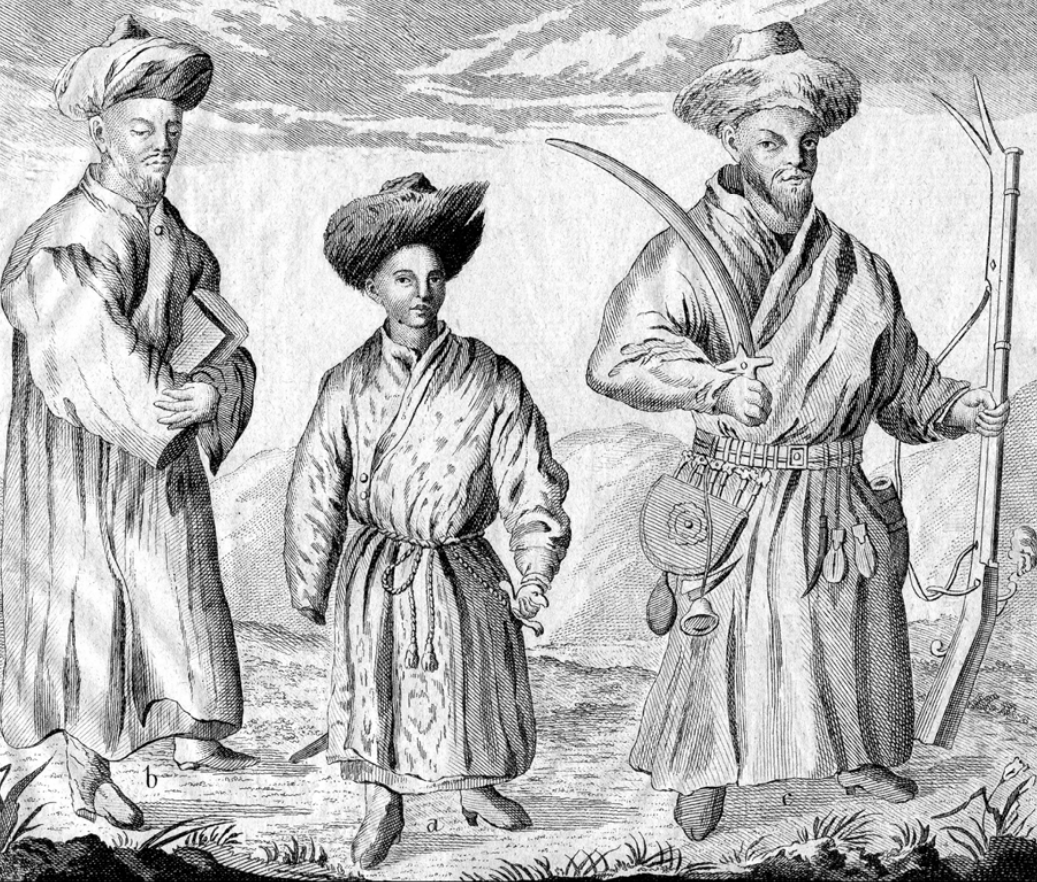
Gallery

Frequently Asked Questions
Why is the Khanate of Bukhara significant in Asian history?
It functioned as the dominant political and cultural force in Transoxiana for nearly three centuries, shaping the region's identity well beyond its borders.
More in Medieval And Early Modern Asian Empires 1-23
Spotted an error? Know more?
This is a living reference — every entry is fact-audited, and reader corrections feed straight into our audit queue. Suggest an edit · See this site's audit record