
Ghurid dynasty

Ali Zifan · CC BY-SA 4.0
The Ghurids were centered in the hills of the Ghor region in present-day central Afghanistan, where they initially started out as local chiefs. They converted to Sunni Islam in the 10th century under Ghaznavid influence.
- Born
- 8th century (region of Ghor)
- Field
- Empire-building, military conquest, patronage of Persian culture
- Nationality
- Eastern Iranian Tajik origin (disputed earlier Pashtun theories rejected by modern scholarship)
- Known for
- Expansion from Ghor to an empire spanning eastern Iran to Bengal; founding of the Delhi Sultanate through their conquests in India
Lore & Background
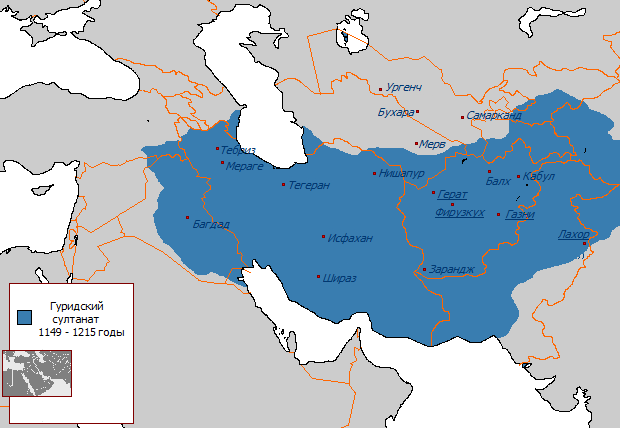
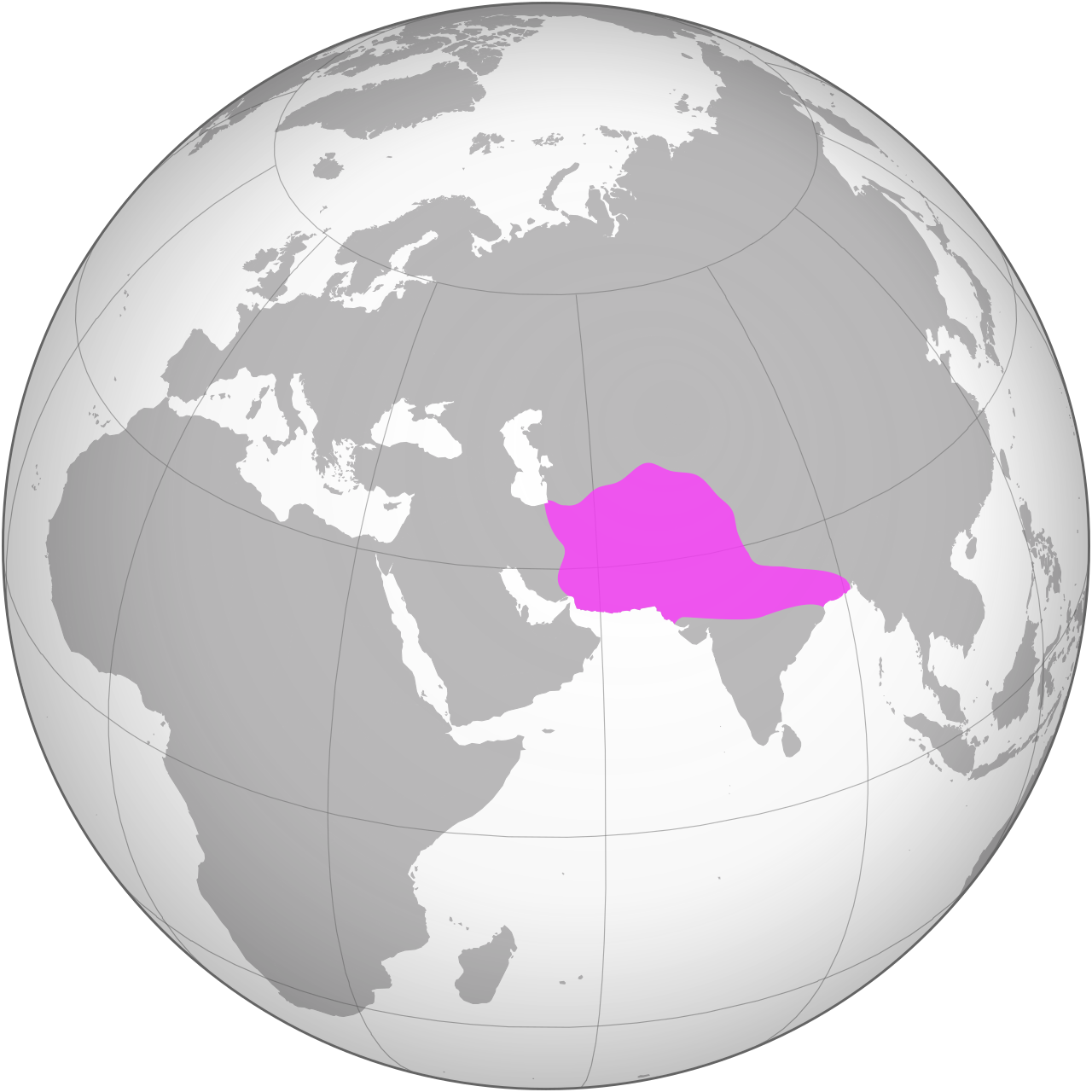
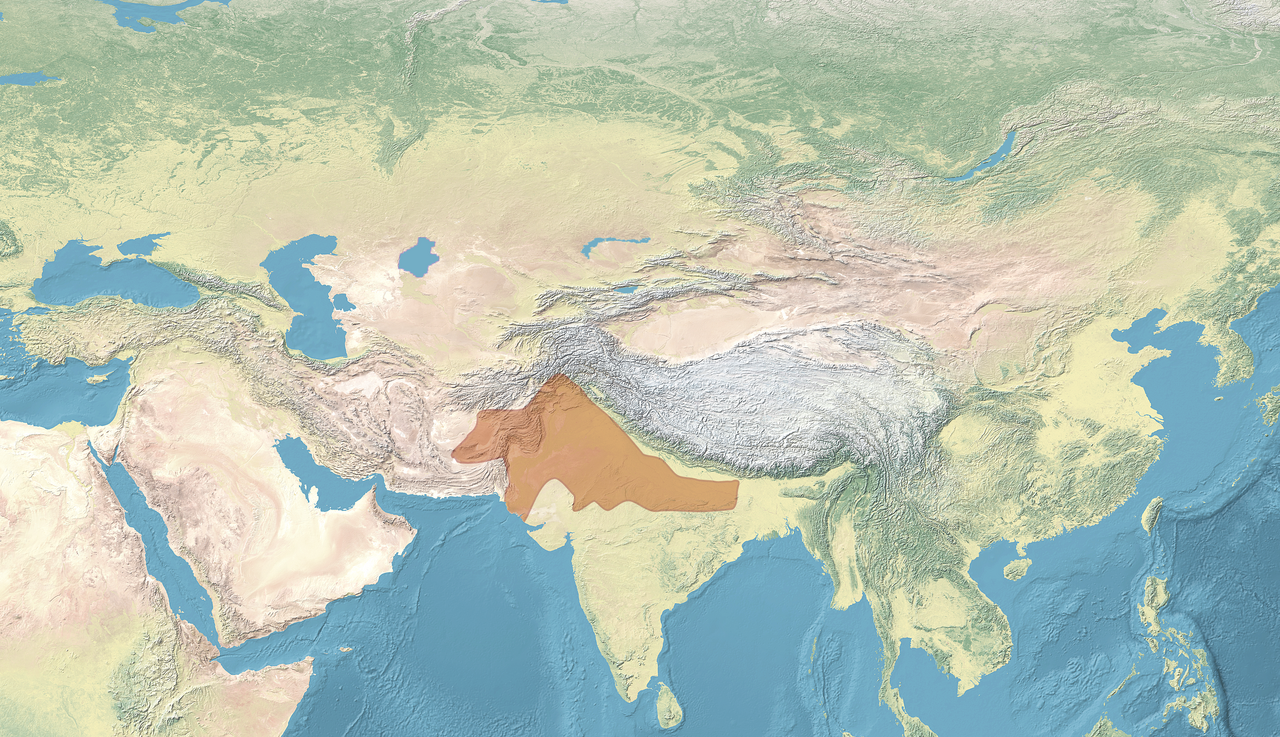
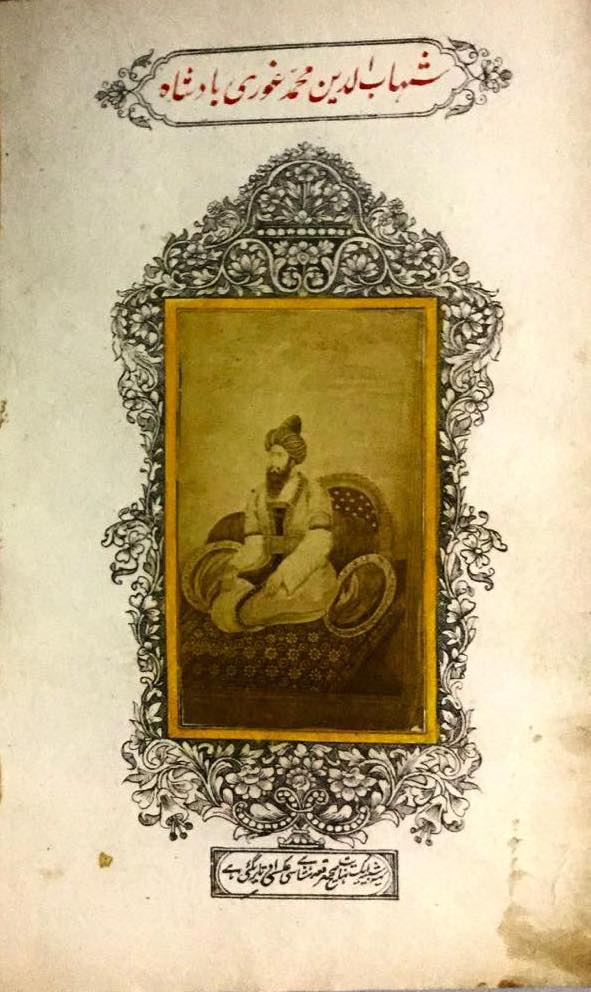
The Ghurids initially ruled as vassals of the Ghaznavids, with their relationship to the Seljuks being more indirect and debated. During the early 12th-century, the long-standing rivalry between the Seljuks and Ghaznavids created a power vacuum in eastern Afghanistan and Panjab which the Ghurids took advantage of and began their territorial expansion. The Seljuk imperial power was itself swept away in eastern Iran with the contemporaneous advent of the Khwarazmian Empire. During the dyarchy of the Ala al-Din Husayn nephews – Ghiyath al-Din Muhammad and Muhammad of Ghor, the Ghurid empire reached its greatest territorial extent, holding territory from eastern Iran through easternmost India. While Ghiyath al-Din was occupied with the Ghurid expansion in the west, his junior partner Muhammad of Ghor and his lieutenants were active east of the Indus Valley as far as Bengal and eventually succeeded in conquering wide swaths of the Gangetic Plain. In the west under Ghiyath al-Din, engaging in a protracted duel with the Shahs of Khwarazm, the Ghurids were checked and never reached the Caspian Sea coast. Their conquests in the Indian subcontinent nevertheless survived for several centuries under the evolving Delhi Sultanate established by Qutb ud-Din Aibak.
Reader's Guide
Their conquests bridged eastern Iran and northern India, reaching as far west as Gorgan on the Caspian Sea and eastward into Bengal. Their legacy includes the patronage of Persian literature, poetry, and culture, despite their native language being a distinct Persian dialect. Modern scholarship rejects earlier theories of Pashtun origin, affirming their eastern Iranian Tajik roots, though their pre-Islamic religious beliefs remain unknown. The dynasty's rapid rise and fall illustrate the volatile power dynamics of medieval Central and South Asia, where shifting alliances and military defeats could erase a ruling house within a decade.
Did You Know?
- The Ghurids' self-designation was Šansabānī, derived from the Middle Persian name Wišnasp.
- The Ghurids' native language was a distinct Persian dialect, different from their court language, Persian.
Founding and the Architecture of Identity
Timur, a warlord of the Barlas tribe—a Mongol group that had gradually Turkicized within Central Asia—founded what would become one of the most consequential empires of the late medieval world in 1370. He governed until his death in 1405, and throughout his reign he positioned himself as the legitimate heir and great restorer of Genghis Khan's Mongol dominion, associating himself closely with the Borjigin lineage. The realm he built stretched across Greater Iran, encompassing modern-day Iran, Iraq, Afghanistan, much of Central Asia, the South Caucasus, and portions of Pakistan, North India, and Turkey. Culturally, the empire wove together Turkic, Mongolic, and Persian threads into a syncretic whole, with the dynasty's final members celebrated as model Perso-Islamic rulers. Timur maintained robust trade and diplomatic channels with Ming China and the Golden Horde; Chinese envoys such as Ma Huan and Chen Cheng traveled westward to his capital at Samarkand. The state itself bore multiple names—Turan, Iran-o-Turan, Mawarannahr—reflecting the layered identities Timur sought to embody.
The Renaissance of Shahrukh and Ulugh Begh
After Timur's death in 1405, the empire entered its most celebrated cultural period under his son Shahrukh Mirza, who reigned from 1405 to 1447. This era, widely recognized as the Timurid Renaissance, saw a remarkable flowering of the arts, sciences, and intellectual life that drew on the empire's blended Turkic, Mongolic, and Persian heritage. Shahrukh's own son, Ulugh Begh, who ruled briefly from 1447 to 1449, was himself a distinguished astronomer and mathematician, embodying the court's commitment to scholarly pursuits alongside political governance. The legacy of this golden age did not end with Ulugh Begh's short reign. Decades later, Husayn Bayqara, who governed from 1469 to 1506, presided over what historians regard as the final great flowering of Timurid cultural production, centered in Herat. Together, these successive periods established a tradition of patronage that linked the dynasty's nomadic steppe origins to the refined Perso-Islamic court culture its later members were praised for embodying.
Fragmentation and the Uzbek Conquest
The Timurid hold on its vast territories began to unravel in the mid-fifteenth century. The dynasty lost the greater part of Persia to the Aq Qoyunlu confederation, a blow sealed by the defeat and death of Abu Sa'id Mirza, who had ruled from 1451 to 1469. Rather than vanishing entirely, the dynasty fragmented into smaller polities—often called Timurid emirates—scattered across Central Asia and Khorasan. These rump states preserved a diminished but still meaningful version of the earlier imperial culture. The most notable of these was the domain of Husayn Bayqara in Herat, whose long reign from 1469 to 1506 is remembered as the last great flowering of Timurid artistic and intellectual life. Yet even this final bastion could not withstand the rising Uzbek power. By 1507, the Uzbeks under Shaybani Khan had conquered nearly all surviving Timurid principalities, capturing both Samarkand and Herat. The once-unified empire of Timur was reduced to scattered, short-lived holdings, and the dynasty's political centrality in the region effectively ended.
The Mughal Inheritance
The most enduring political legacy of the Timurid line extended far beyond Central Asia. In the early sixteenth century, Babur, a Timurid prince based in Ferghana in modern-day Uzbekistan, launched a series of campaigns that would reshape the political landscape of South Asia. He first invaded Kabulistan in present-day Afghanistan and established a small kingdom there, which he then used as a strategic staging ground. After a final, unsuccessful bid to reclaim Samarkand between 1511 and 1512, Babur redirected his ambitions southward toward the Indian subcontinent. In 1526 he invaded the Delhi Sultanate and, through his victory, founded the Mughal Empire. In this way, the Timurid dynasty, though long stripped of its original territorial base in Greater Iran and Central Asia, produced a ruler whose conquests gave birth to a new and vast imperial polity in South Asia, carrying forward the syncretic Turkic, Mongolic, and Persian heritage that had defined the original Timurid state from its founding in 1370.
Gallery
Frequently Asked Questions
What were the Ghurid dynasty's powers and role?
At their peak the Ghurids controlled a vast territory stretching from eastern Iran all the way to Bengal, making them one of the major military and political forces of the era. They were also noted patrons of Persian culture and literature, and their conquests in the Indian subcontinent laid the groundwork for what became the Delhi Sultanate.
Why is the Ghurid dynasty important to medieval Asian history?
They transformed a small hill-region chiefdom into a trans-regional empire and, through their Indian campaigns, effectively created the conditions for the Delhi Sultanate to emerge. Their patronage also helped spread Persianate court culture across a wide swath of Central and South Asia.
What is the Ghurid dynasty's ethnic origin?
Modern scholarship identifies the Ghurids as eastern Iranian Tajiks from the Ghor region, a view that has largely displaced older theories linking them to Pashtun ancestry. They adopted Sunni Islam in the 10th century, largely under the influence of the neighboring Ghaznavid state.
More in Medieval And Early Modern Asian Empires 1-23
Spotted an error? Know more?
This is a living reference — every entry is fact-audited, and reader corrections feed straight into our audit queue. Suggest an edit · See this site's audit record