
Ilkhanate
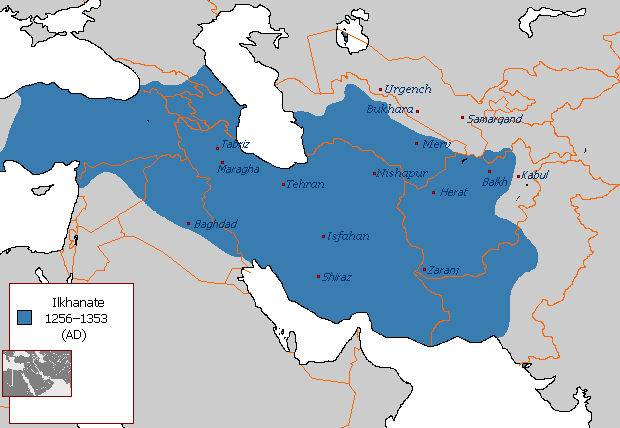
Mongol khanate ruling Iran and West Asia.

Ali Zifan · CC BY-SA 4.0
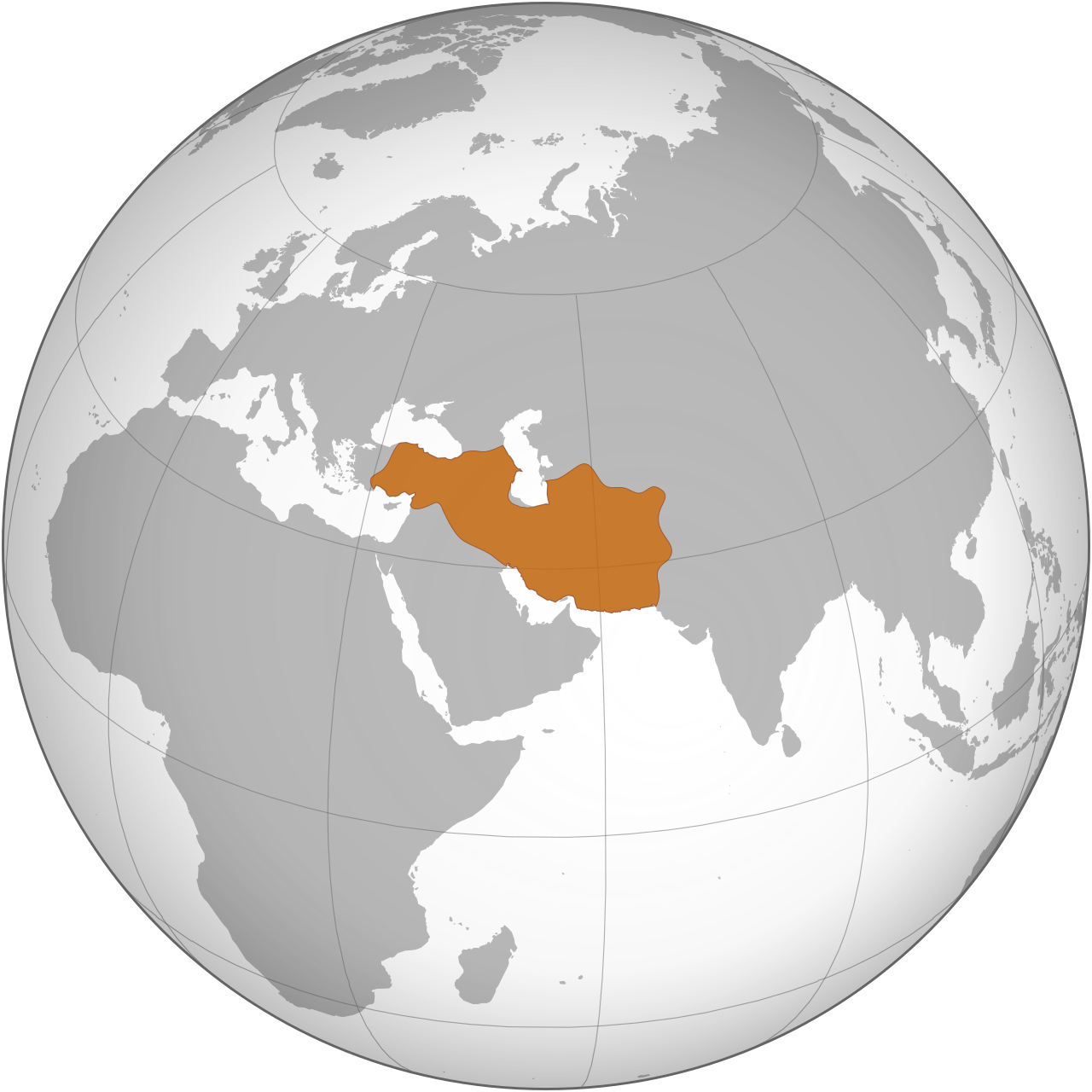
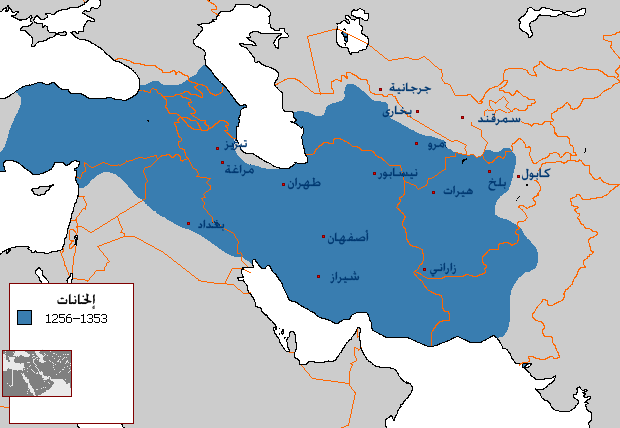
The Ilkhanate, also known as the Il-khanate, was a Mongol khanate founded in the southwestern territories of the Mongol Empire. It was ruled by the Il-Khans or Ilkhanids and known to the Mongols as Hülegü Ulus. The Ilkhanid realm was officially called the Land of Iran (Irānzamin) or simply Iran. The Ilkhanate's core territory was in what is now Iran, Azerbaijan, and Turkey, and at its greatest extent included parts of modern Iraq, Syria, Armenia, Georgia, Afghanistan, Turkmenistan, Pakistan, Tajikistan, and Dagestan.
- founder
- Hülegü Khan
- capital
- Not specified in article
- known_for
- Mongol rule over Iran, conversion to Islam, revival of the concept of 'Land of Iran'
Lore & Background
The Ilkhanate originated from the Mongol conquests of the early 13th century. After Möngke's death, Hülegü returned to Mongolia, leaving a small force that was defeated at the Battle of Ain Jalut by the Mamluks in 1260.
Reader's Guide
The Ilkhanate's significance lies in its role as a Mongol successor state that integrated Mongol rule with Iranian traditions. Although of non-Iranian origin, the Ilkhanid rulers advertised their authority by tying themselves to the Iranian past, recruiting historians to present the Mongols as heirs to the Sasanian Empire. Native intellectuals interpreted the Mongol unification as a revival of long-lost dynastic tradition, and the concept of 'Land of Iran' (Irān-zamin) became an important ideology, later developed by the Safavid Empire. This revival of territorial unity, though not intended by the Mongols, became a lasting legacy of Mongol rule in Iran. The Ilkhanate also faced internal and external conflicts, including war with the Golden Horde under Berke, invasions by the Chagatai Khanate, and defeats by the Mamluks.
Did You Know?
- The Ilkhanate was known to the Mongols as Hülegü Ulus, meaning 'people/state of Hülegü'.
- Hülegü took Chinese scholars and astronomers with him, from whom the Persian astronomer Nasir al-Din al-Tusi learned about Chinese calculating tables.
- The Ilkhanate was ravaged by the Black Death in the 1330s.
Founding & Territorial Reach
The Ilkhanate emerged from the succession crisis that followed the death of Möngke Khan in 1259, when his brother Hülegü inherited the western and central Asian portions of the Mongol Empire. The new khanate's heartland lay in the lands that today form Iran, Azerbaijan, and Turkey, though its borders at peak expansion stretched across parts of modern Iraq, Syria, Armenia, Georgia, Afghanistan, Turkmenistan, Pakistan, Tajikistan, and even Dagestan in present-day Russia. The Mongols themselves referred to the polity as Hülegü Ulus, meaning the people or state of Hülegü, a name that reflected its origin as one of the uluses carved out for Genghis Khan's descendants. To the local populations, however, the realm carried a far more resonant title: the Land of Iran, or Irānzamin, a designation that would echo through centuries of Persian political thought. The Ilkhanid rulers, though of non-Iranian stock, deliberately anchored their legitimacy in the region's deep historical memory, a strategy that shaped the cultural identity of the state from its very inception.
Hülegü's Campaigns & the Fall of Baghdad
Hülegü, the third son of Tolui and grandson of Genghis Khan, was tasked by his brother Möngke with conquering the Abbasid Caliphate, receiving a fifth of the entire Mongol army for the endeavor. He brought Chinese scholars and astronomers with him, among whom the Persian polymath Nasir al-Din al-Tusi absorbed knowledge of Chinese calculating tables, and an observatory was erected on a hill in Maragheh. In 1256 he crushed the Nizari Ismaili state, and two years later in 1258 he destroyed the Abbasid Caliphate, after which he proclaimed himself ilkhan, a subordinate khan. His forces pushed as far as Gaza, briefly seizing Ayyubid Syria and Aleppo in 1260. Yet Möngke's sudden death recalled Hülegü to Mongolia for the kuriltai, and the roughly 10,000 troops he left in Palestine were shattered by the Mamluks at the Battle of Ain Jalut. Tensions with Berke of the Golden Horde, fueled by the suspicious deaths of three Jochid princes in Hülegü's service and disputes over war booty, escalated into open war by 1262, with Berke forging an alliance with the Mamluk sultan Baybars against his fellow Mongol.
Cultural Synthesis & the Idea of Iran
Although the Ilkhanid rulers were of Mongol origin, they went to considerable lengths to present themselves as inheritors of the Iranian political tradition. They commissioned historians to frame the Mongol conquest as a continuation of the Sasanian imperial legacy spanning 224 to 651, effectively weaving themselves into the narrative of Persian dynastic history. Native intellectuals, in turn, embraced this framing, interpreting the Mongol unification as a revival of a long-lost dynastic tradition. The concept of Irānzamin, the Land of Iran, became a powerful ideological pillar of the state and was later developed further by the Safavid Empire between 1501 and 1736. This parallel to the Yuan dynasty's impact in China is striking: in both cases, the Mongol conquest, though not originally intended to produce a unified national identity, generated a lasting legacy of territorial cohesion. The Ilkhanate thus became a crucible where Mongol military administration, Persian scholarly culture, and Islamic intellectual traditions merged into a distinctive political and cultural synthesis that outlasted the khanate itself.
Conversion, Plague, and Collapse
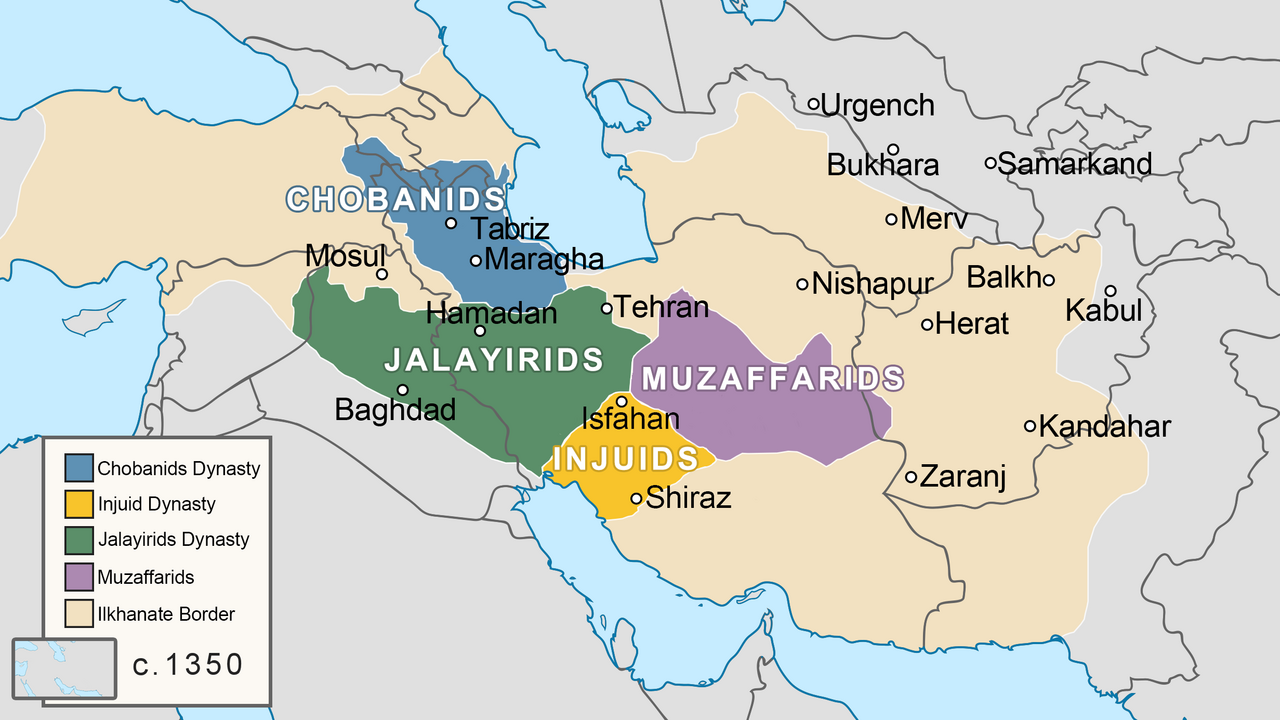
The later Ilkhanid period was marked by a profound religious transformation and a catastrophic end. Beginning with Ghazan in 1295, successive rulers converted to Islam, a shift that fundamentally altered the character of the state and its relationship to the predominantly Muslim populations it governed. The khanate's final decades were devastated by the Black Death, which swept through its territories in the 1330s, decimating populations and undermining the already fragile administrative structures. The last of the Ilkhanid line, Abu Sa'id Bahadur Khan, died in 1335, and with his passing the Ilkhanate disintegrated into rival factions and regional powers. The combination of epidemic, dynastic exhaustion, and the absence of a clear successor left no single authority capable of holding together the vast and diverse territories that had once stretched from Central Asia to the Levant. What remained were the cultural and ideological seeds, particularly the concept of Iranian territorial unity, that would germinate in later Persian polities even as the political entity itself dissolved into the regional mosaic of the post-Mongol Middle East.
Gallery

Frequently Asked Questions
What was the Ilkhanate?
The Ilkhanate was a Mongol khanate that governed Iran and parts of West Asia after the Mongol Empire fractured into successor states. The Mongols themselves called it Hülegü Ulus, while its official title was the 'Land of Iran' (Irānzamin).
Where did the Ilkhanate rule?
Its core territory covered present-day Iran, Azerbaijan, and Turkey, representing the southwestern slice of the former Mongol Empire. At its peak the realm also stretched into parts of the Caucasus and Central Asia.
More in Medieval And Early Modern Asian Empires 1-23
Spotted an error? Know more?
This is a living reference — every entry is fact-audited, and reader corrections feed straight into our audit queue. Suggest an edit · See this site's audit record